"Whether we and our politicians know it or not, Nature is party to all our deals and decisions, and she has more votes, a longer memory, and a sterner sense of justice than we do." — Wendell Berry
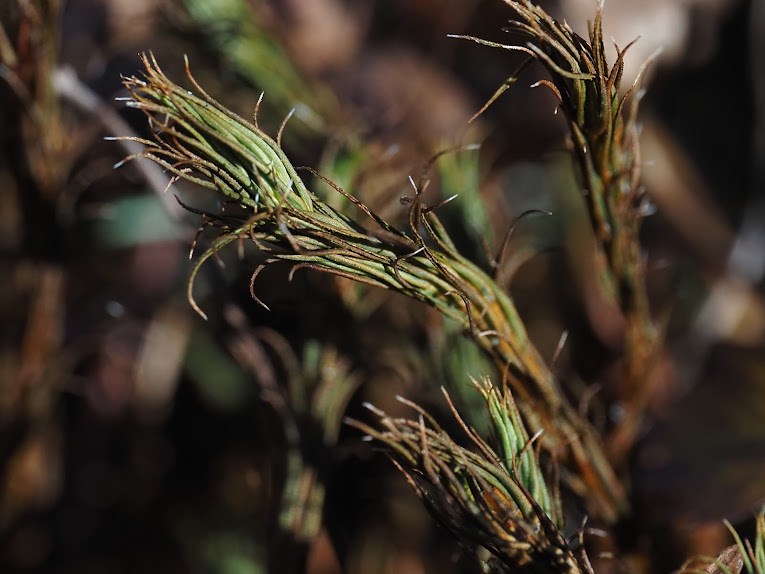
See https://wordpress.com/view/667-per-cm.net/ Retired data scientist and statistician. Now working projects in quantitative ecology and, specifically, phenology of Bryophyta and technical methods for their study, notably Macrophotography. Some photos of mine: https://www.flickr.com/photos/198372469@N03/
Hermann Scheer
Hermann Scheer was a visionary, a major guy, who thought deep thoughts about energy, and its implications for humanity’s relationship with physical reality
Tim Harford's “More or Less''
Tim Harford explains – and sometimes debunks – the numbers and statistics used in political debate, the news and everyday life
BioPython
A collection of Python tools for quantitative Biology
Busting Myths About Heat Pumps
Heat pumps are perhaps the most efficient heating and cooling systems available. Recent literature distributed by utilities hawking natural gas and other sources use performance figures from heat pumps as they were available 15 years ago. See today’s.
Darren Wilkinson's introduction to ABC
Darren Wilkinson’s introduction to approximate Bayesian computation (“ABC”). See also his post about summary statistics for ABC https://darrenjw.wordpress.com/2013/09/01/summary-stats-for-abc/
In Monte Carlo We Trust
The statistics blog of Matt Asher, actually called the “Probability and Statistics Blog”, but his subtitle is much more appealing. Asher has a Manifesto at http://www.statisticsblog.com/manifesto/.
GeoEnergy Math
Prof Paul Pukite’s Web site devoted to energy derived from geological and geophysical processes and categorized according to its originating source.
Logistic curves in market disruption
From DollarsPerBBL, about logistic or S-curves as models of product take-up rather than exponentials, with notes on EVs
HotWhopper: It's excellent.
Global warming and climate change. Eavesdropping on the deniosphere, its weird pseudo-science and crazy conspiracy whoppers.
Climate change: Evidence and causes
A project of the UK Royal Society: (1) Answers to key questions, (2) evidence and causes, and (3) a short guide to climate science
Rabett Run
Incisive analysis of climate science versus deliberate distraction
CLIMATE ADAM
Previously from the Science news staff at the podcast of Nature (“Nature Podcast”), the journal, now on YouTube, encouraging climate action through climate comedy.
Isaac Held's blog
In the spirit of Ray Pierrehumbert’s “big ideas come from small models” in his textbook, PRINCIPLES OF PLANETARY CLIMATE, Dr Held presents quantitative essays regarding one feature or another of the Earth’s climate and weather system.
"Mighty Microgrids" Webinar
This is a Webinar on YouTube about Microgrids from the Institute for Local Self-Reliance (ILSR), featuring New York State and Minnesota
The Keeling Curve
The first, and one of the best programs for creating a spatially significant long term time series of atmospheric concentrations of CO2. Started amongst great obstacles by one, smart determined guy, Charles David Keeling.
NOAA Annual Greenhouse Gas Index report
The annual assessment by the National Oceanic and Atmospheric Administration of the radiative forcing from constituent atmospheric greenhouse gases
Tamino's Open Mind
Open Mind: A statistical look at climate, its science, and at science denial
The great Michael Osborne's latest opinions
Michael Osborne is a genius operative and champion of solar energy. I have learned never to disregard ANYTHING he says. He is mentor of Karl Ragabo, and the genius instigator of the Texas renewable energy miracle.
AIP's history of global warming science: impacts
The American Institute of Physics has a fine history of the science of climate change. This link summarizes the history of impacts of climate change.
"When Did Global Warming Stop"
Doc Snow’s treatment of the denier claim that there’s been no warming for the most recent N years. (See http://hubpages.com/@doc-snow for more on him.)
"Warming Slowdown?" (part 1 of 2)
The idea of a global warming slowdown or hiatus is critically examined, emphasizing the literature, the datasets, and means and methods for telling such. In two parts.
Paul Beckwith
Professor Beckwith is, in my book, one of the most insightful and analytical observers on climate I know. I highly recommend his blog, and his other informational products.


 ecoquant