"Whether we and our politicians know it or not, Nature is party to all our deals and decisions, and she has more votes, a longer memory, and a sterner sense of justice than we do." — Wendell Berry
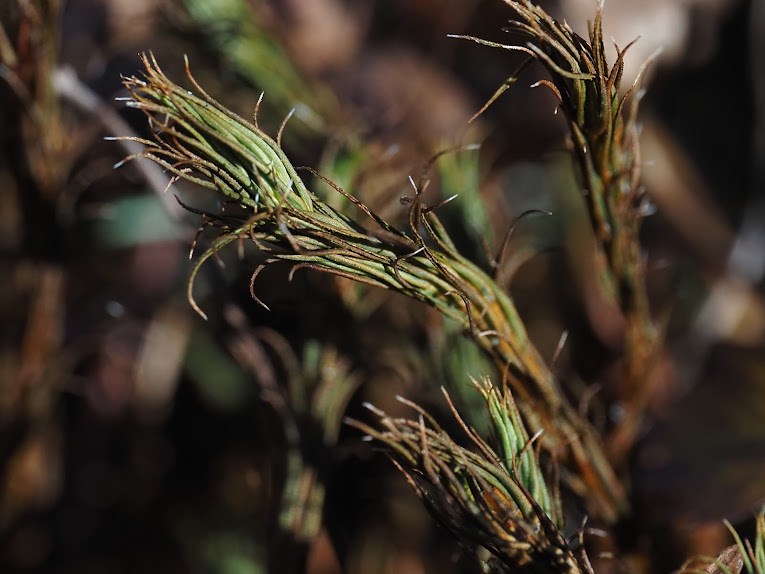
See https://wordpress.com/view/667-per-cm.net/ Retired data scientist and statistician. Now working projects in quantitative ecology and, specifically, phenology of Bryophyta and technical methods for their study, notably Macrophotography. Some photos of mine: https://www.flickr.com/photos/198372469@N03/
Darren Wilkinson's introduction to ABC
Darren Wilkinson’s introduction to approximate Bayesian computation (“ABC”). See also his post about summary statistics for ABC https://darrenjw.wordpress.com/2013/09/01/summary-stats-for-abc/
Busting Myths About Heat Pumps
Heat pumps are perhaps the most efficient heating and cooling systems available. Recent literature distributed by utilities hawking natural gas and other sources use performance figures from heat pumps as they were available 15 years ago. See today’s.
Pat's blog
While it is described as “The mathematical (and other) thoughts of a (now retired) math teacher”, this is false humility, as it chronicles the present and past life and times of mathematicians in their context. Recommended.
All about ENSO, and lunar tides (Paul Pukite)
Historically, ENSO has been explained in terms of winds. But recently — and Dr Paul Pukite has insisted upon this for a long time — the oscillation of ENSO has been explained as a large-scale slosh due to lunar tidal forcing.
Why "naive Bayes" is not Bayesian
Explains why the so-called “naive Bayes” classifier is not Bayesian. The setup is okay, but estimating probabilities by doing relative frequencies instead of using Dirichlet conjugate priors or integration strays from The Path.
Tim Harford's “More or Less''
Tim Harford explains – and sometimes debunks – the numbers and statistics used in political debate, the news and everyday life
"Warming Slowdown?" (part 2 of 2)
The idea of a global warming slowdown or hiatus is critically examined, emphasizing the literature, the datasets, and means and methods for telling such. The second part.
Anti—Anti-#ClimateEmergency
Whether to declare a climate emergency is debatable. But some critics have gone way overboard.
Paul Beckwith
Professor Beckwith is, in my book, one of the most insightful and analytical observers on climate I know. I highly recommend his blog, and his other informational products.
Équiterre
Equiterre helps build a social movement by encouraging individuals, organizations and governments to make ecological and equitable choices, in a spirit of solidarity.
Transitioning to fully renewable energy
Professor Saul Griffiths talks to transitioning the customer journey, from a dependency upon fossil fuels to an electrified future
Climate change: Evidence and causes
A project of the UK Royal Society: (1) Answers to key questions, (2) evidence and causes, and (3) a short guide to climate science
The Keeling Curve
The first, and one of the best programs for creating a spatially significant long term time series of atmospheric concentrations of CO2. Started amongst great obstacles by one, smart determined guy, Charles David Keeling.
AIP's history of global warming science: impacts
The American Institute of Physics has a fine history of the science of climate change. This link summarizes the history of impacts of climate change.
HotWhopper: It's excellent.
Global warming and climate change. Eavesdropping on the deniosphere, its weird pseudo-science and crazy conspiracy whoppers.
"Warming Slowdown?" (part 1 of 2)
The idea of a global warming slowdown or hiatus is critically examined, emphasizing the literature, the datasets, and means and methods for telling such. In two parts.
The beach boondoggle
Prof Rob Young on how owners of beach property are socializing their risks at costs to all of us, not the least being it seems coastal damage is less than it actually is
NOAA Annual Greenhouse Gas Index report
The annual assessment by the National Oceanic and Atmospheric Administration of the radiative forcing from constituent atmospheric greenhouse gases
Tamino's Open Mind
Open Mind: A statistical look at climate, its science, and at science denial


 ecoquant