"Whether we and our politicians know it or not, Nature is party to all our deals and decisions, and she has more votes, a longer memory, and a sterner sense of justice than we do." — Wendell Berry
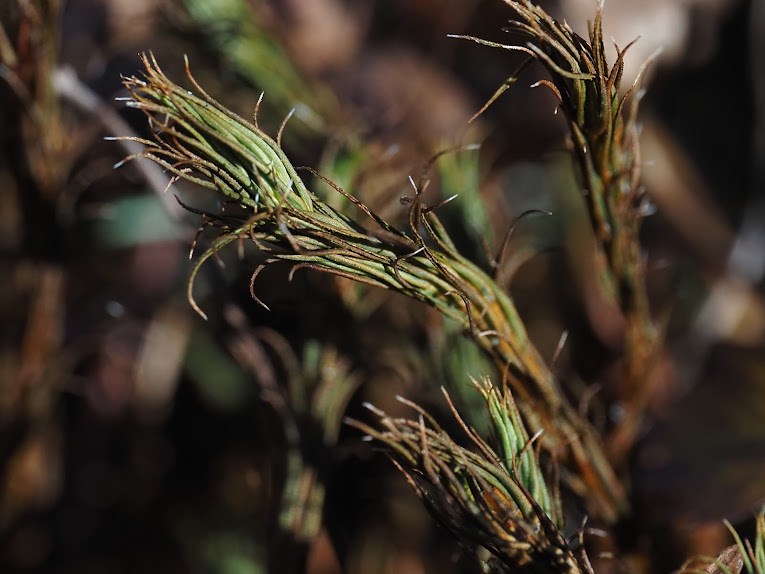
See https://wordpress.com/view/667-per-cm.net/ Retired data scientist and statistician. Now working projects in quantitative ecology and, specifically, phenology of Bryophyta and technical methods for their study, notably Macrophotography. Some photos of mine: https://www.flickr.com/photos/198372469@N03/
Tim Harford's “More or Less''
Tim Harford explains – and sometimes debunks – the numbers and statistics used in political debate, the news and everyday life
Darren Wilkinson's introduction to ABC
Darren Wilkinson’s introduction to approximate Bayesian computation (“ABC”). See also his post about summary statistics for ABC https://darrenjw.wordpress.com/2013/09/01/summary-stats-for-abc/
Flettner Rotor
Bruce Yeany introduces the Flettner Rotor and related science
Pat's blog
While it is described as “The mathematical (and other) thoughts of a (now retired) math teacher”, this is false humility, as it chronicles the present and past life and times of mathematicians in their context. Recommended.
Why "naive Bayes" is not Bayesian
Explains why the so-called “naive Bayes” classifier is not Bayesian. The setup is okay, but estimating probabilities by doing relative frequencies instead of using Dirichlet conjugate priors or integration strays from The Path.
Hermann Scheer
Hermann Scheer was a visionary, a major guy, who thought deep thoughts about energy, and its implications for humanity’s relationship with physical reality
Mike Bloomberg, 2020
He can get progress on climate done, has the means and experts to counter the Trump and Republican digital disinformation machine, and has the experience, knowledge, and depth of experience to achieve and unify.
All about ENSO, and lunar tides (Paul Pukite)
Historically, ENSO has been explained in terms of winds. But recently — and Dr Paul Pukite has insisted upon this for a long time — the oscillation of ENSO has been explained as a large-scale slosh due to lunar tidal forcing.
AIP's history of global warming science: impacts
The American Institute of Physics has a fine history of the science of climate change. This link summarizes the history of impacts of climate change.
Isaac Held's blog
In the spirit of Ray Pierrehumbert’s “big ideas come from small models” in his textbook, PRINCIPLES OF PLANETARY CLIMATE, Dr Held presents quantitative essays regarding one feature or another of the Earth’s climate and weather system.
Wind sled
Wind sled: A zero carbon way of exploring ice sheets
Paul Beckwith
Professor Beckwith is, in my book, one of the most insightful and analytical observers on climate I know. I highly recommend his blog, and his other informational products.
CLIMATE ADAM
Previously from the Science news staff at the podcast of Nature (“Nature Podcast”), the journal, now on YouTube, encouraging climate action through climate comedy.
"When Did Global Warming Stop"
Doc Snow’s treatment of the denier claim that there’s been no warming for the most recent N years. (See http://hubpages.com/@doc-snow for more on him.)
"Warming Slowdown?" (part 1 of 2)
The idea of a global warming slowdown or hiatus is critically examined, emphasizing the literature, the datasets, and means and methods for telling such. In two parts.
Climate Communication
Hassol, Somerville, Melillo, and Hussin site communicating climate to the public
Transitioning to fully renewable energy
Professor Saul Griffiths talks to transitioning the customer journey, from a dependency upon fossil fuels to an electrified future
The great Michael Osborne's latest opinions
Michael Osborne is a genius operative and champion of solar energy. I have learned never to disregard ANYTHING he says. He is mentor of Karl Ragabo, and the genius instigator of the Texas renewable energy miracle.
Mathematics and Climate Research Network
The Mathematics and Climate Research Network (MCRN) engages mathematicians to collaborating on the cryosphere, conceptual model validation, data assimilation, the electric grid, food systems, nonsmooth systems, paleoclimate, resilience, tipping points.
Climate change: Evidence and causes
A project of the UK Royal Society: (1) Answers to key questions, (2) evidence and causes, and (3) a short guide to climate science
"Mighty Microgrids" Webinar
This is a Webinar on YouTube about Microgrids from the Institute for Local Self-Reliance (ILSR), featuring New York State and Minnesota
NOAA Annual Greenhouse Gas Index report
The annual assessment by the National Oceanic and Atmospheric Administration of the radiative forcing from constituent atmospheric greenhouse gases


 ecoquant