
Distributed Solar: The Democratizaton of Energy

Blogroll
- James' Empty Blog
- SASB Sustainability Accounting Standards Board
- Prediction vs Forecasting: Knaub “Unfortunately, ‘prediction,’ such as used in model-based survey estimation, is a term that is often subsumed under the term ‘forecasting,’ but here we show why it is important not to confuse these two terms.”
- Slice Sampling
- Mark Berliner's video lecture "Bayesian mechanistic-statistical modeling with examples in geophysical settings"
- Mertonian norms
- Darren Wilkinson's introduction to ABC Darren Wilkinson’s introduction to approximate Bayesian computation (“ABC”). See also his post about summary statistics for ABC https://darrenjw.wordpress.com/2013/09/01/summary-stats-for-abc/
- Earth Family Alpha Michael Osborne’s blog (former Executive at Austin Energy, now Chairman of the Electric Utility Commission for Austin, Texas)
- The Mermaid's Tale A conversation about biological complexity and evolution, and the societal aspects of science
- Brendon Brewer on Overfitting Important and insightful presentation by Brendon Brewer on overfitting
- Logistic curves in market disruption From DollarsPerBBL, about logistic or S-curves as models of product take-up rather than exponentials, with notes on EVs
- Brian McGill's Dynamic Ecology blog Quantitative biology with pithy insights regarding applications of statistical methods
- The Keeling Curve: its history History of the Keeling Curve and Charles David Keeling
- Harvard's Project Implicit
- Number Cruncher Politics
- International Society for Bayesian Analysis (ISBA)
- Why It’s So Freaking Hard To Make A Good COVID-19 Model Five Thirty Eight’s take on why pandemic modeling is so difficult
- Charlie Kufs' "Stats With Cats" blog “You took Statistics 101. Now what?”
- "Impacts of Green New Deal energy plans on grid stability, costs, jobs, health, and climate in 143 countries" (Jacobson, Delucchi, Cameron, et al) Global warming, air pollution, and energy insecurity are three of the greatest problems facing humanity. To address these problems, we develop Green New Deal energy roadmaps for 143 countries.
- Survey Methodology, Prof Ron Fricker http://faculty.nps.edu/rdfricke/
- Professor David Draper
- Why "naive Bayes" is not Bayesian Explains why the so-called “naive Bayes” classifier is not Bayesian. The setup is okay, but estimating probabilities by doing relative frequencies instead of using Dirichlet conjugate priors or integration strays from The Path.
- In Monte Carlo We Trust The statistics blog of Matt Asher, actually called the “Probability and Statistics Blog”, but his subtitle is much more appealing. Asher has a Manifesto at http://www.statisticsblog.com/manifesto/.
- Higgs from AIR describing NAO and EA Stephanie Higgs from AIR Worldwide gives a nice description of NAO and EA in the context of discussing “The Geographic Impact of Climate Signals on European Winter Storms”
- Dollars per BBL: Energy in Transition
- distributed solar and matching location to need
- Dominic Cummings blog Chief advisor to the PM, United Kingdom
- Thaddeus Stevens quotes As I get older, I admire this guy more and more
- Ted Dunning
- All about models
- Leadership lessons from Lao Tzu
- WEAPONS OF MATH DESTRUCTION, reviews Reviews of Cathy O’Neil’s new book
- Earth Family Beta MIchael Osborne’s blog on Science and the like
- Dr James Spall's SPSA
- NCAR AtmosNews
- OOI Data Nuggets OOI Ocean Data Lab: The Data Nuggets
- Team Andrew Weinberg Walking September 8th for the Jimmy Fund!
- Tim Harford's “More or Less'' Tim Harford explains – and sometimes debunks – the numbers and statistics used in political debate, the news and everyday life
- Label Noise
- Gabriel's staircase
- ggplot2 and ggfortify Plotting State Space Time Series with ggplot2 and ggfortify
- Subsidies for wind and solar versus subsidies for fossil fuels
- Musings on Quantitative Paleoecology Quantitative methods and palaeoenvironments.
- American Association for the Advancement of Science (AAAS)
- John Cook's reasons to use Bayesian inference
- BioPython A collection of Python tools for quantitative Biology
- Woods Hole Oceanographic Institution (WHOI)
- Mrooijer's Numbers R 4Us
- Gavin Simpson
- GeoEnergy Math Prof Paul Pukite’s Web site devoted to energy derived from geological and geophysical processes and categorized according to its originating source.
climate change
- Ray Pierrehumbert's site related to "Principles of Planetary Climate" THE book on climate science
- “The discovery of global warming'' (American Institute of Physics)
- An open letter to Steve Levitt
- NOAA Annual Greenhouse Gas Index report The annual assessment by the National Oceanic and Atmospheric Administration of the radiative forcing from constituent atmospheric greenhouse gases
- Anti—Anti-#ClimateEmergency Whether to declare a climate emergency is debatable. But some critics have gone way overboard.
- Sea Change Boston
- `The unchained goddess' 1958 Bell Telephone Science Hour broadcast regarding, among other things, climate change.
- Mrooijer's Global Temperature Explorer
- Climate model projections versus observations
- Climate Change Denying Organizations
- "Warming Slowdown?" (part 1 of 2) The idea of a global warming slowdown or hiatus is critically examined, emphasizing the literature, the datasets, and means and methods for telling such. In two parts.
- Eli on the spectroscopic basis of atmospheric radiation physical chemistry
- Climate change: Evidence and causes A project of the UK Royal Society: (1) Answers to key questions, (2) evidence and causes, and (3) a short guide to climate science
- James Powell on sampling the climate consensus
- SOLAR PRODUCTION at Westwood Statistical Studios Generation charts for our home in Westwood, MA
- Paul Beckwith Professor Beckwith is, in my book, one of the most insightful and analytical observers on climate I know. I highly recommend his blog, and his other informational products.
- AIP's history of global warming science: impacts The American Institute of Physics has a fine history of the science of climate change. This link summarizes the history of impacts of climate change.
- Transitioning to fully renewable energy Professor Saul Griffiths talks to transitioning the customer journey, from a dependency upon fossil fuels to an electrified future
- Energy payback period for solar panels Considering everything, how long do solar panels have to operate to offset the energy used to produce them?
- Climate Change: A health emergency … New England Journal of Medicine Caren G. Solomon, M.D., M.P.H., and Regina C. LaRocque, M.D., M.P.H., January 17, 2019 N Engl J Med 2019; 380:209-211 DOI: 10.1056/NEJMp1817067
- James Hansen and granddaughter Sophie on moving forward with progress on climate
- "Getting to the Energy Future We Want," Dr Steven Chu
- Non-linear feedbacks in climate (discussion of Bloch-Johnson, Pierrehumbert, Abbot paper) Discussion of http://onlinelibrary.wiley.com/wol1/doi/10.1002/2015GL064240/abstract
- Model state level energy policy for New Englad Bob Massie’s proposed energy policy for Massachusetts, an admirable model for energy policy anywhere in New England
- Andy Zucker's "Climate Change and Psychology"
- "Impacts of Green New Deal energy plans on grid stability, costs, jobs, health, and climate in 143 countries" (Jacobson, Delucchi, Cameron, et al) Global warming, air pollution, and energy insecurity are three of the greatest problems facing humanity. To address these problems, we develop Green New Deal energy roadmaps for 143 countries.
- "Climate science is setttled enough"
- Simple models of climate change
- ATTP summarizes all that stuff about Committed Warming from AND THEN THERE’S PHYSICS
- Earth System Models
- The net average effect of a warming climate is increased aridity (Professor Steven Sherwood)
- "Warming Slowdown?" (part 2 of 2) The idea of a global warming slowdown or hiatus is critically examined, emphasizing the literature, the datasets, and means and methods for telling such. The second part.
- Spectra Energy exposed
- The Carbon Cycle The Carbon Cycle, monitored by The Carbon Project
- Rabett Run Incisive analysis of climate science versus deliberate distraction
- "Betting strategies on fluctuations in the transient response of greenhouse warming" By Risbey, Lewandowsky, Hunter, Monselesan: Betting against climate change on durations of 15+ years is no longer a rational proposition.
- Jacobson WWS literature index
- Ricky Rood's “What would happen to climate if we (suddenly) stopped emitting GHGs today?
- Isaac Held's blog In the spirit of Ray Pierrehumbert’s “big ideas come from small models” in his textbook, PRINCIPLES OF PLANETARY CLIMATE, Dr Held presents quantitative essays regarding one feature or another of the Earth’s climate and weather system.
- David Appell's early climate science
- Sir David King David King’s perspective on climate, and the next thousands of years for humanity
- CLIMATE ADAM Previously from the Science news staff at the podcast of Nature (“Nature Podcast”), the journal, now on YouTube, encouraging climate action through climate comedy.
- MIT's Climate Primer
- Bloomberg interactive graph on “What's warming the world''
- `Who to believe on climate change': Simple checks By Bart Verheggen
- Jacobson WWS literature index
- The HUMAN-caused greenhouse effect, in under 5 minutes, by Bill Nye
- Updating the Climate Science: What path is the real world following? From Professors Makiko Sato & James Hansen of Columbia University
- And Then There's Physics
- Tamino's Open Mind Open Mind: A statistical look at climate, its science, and at science denial
Archives
Jan Galkowski
Category Archives: Hale Reservation
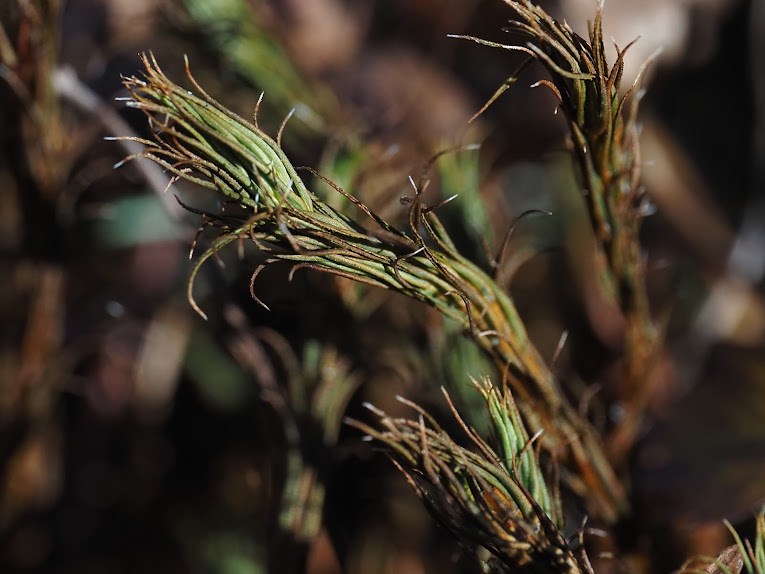
a variety of bryophyte macrophotographs
Posted in ABLS, amateur science, American Bryological and Lichenological Society, biology, Botany, bryology, bryophytes, citizen data, citizen science, Commonwealth of Massachusetts, ecology, field biology, Hale Reservation, macrophotography, mosses, National Phenology Network, quantitative biology, quantitative ecology, sampling algorithms, statistical ecology
1 Comment
New Meetup: Massachusetts Mosses and Lichens
I have started a new Meetup group: Massachusetts Mosses and Lichens. I am inviting anyone with an interest in mosses and lichens to join in, particularly if you live in the “greater Massachusetts area”. Because of pandemic, there’ll be no … Continue reading
Posted in ABLS, American Bryological and Lichenological Society, American Statistical Association, biology, Botany, Brent Mishler, bryology, bryophytes, citizen data, citizen science, ecology, field biology, field research, field science, Hale Reservation, Janice Glime, Jerry Jenkins, lichenology, lichens, longitudinal survey of mosses, macrophotography, maths, mesh models, mosses, Nancy G Slack, National Phenology Network, population biology, population dynamics, Ralph Pope, science, spatial statistics, statistical ecology, Sue Williams, the right to know, Westwood
Leave a comment
 ecoquant

